
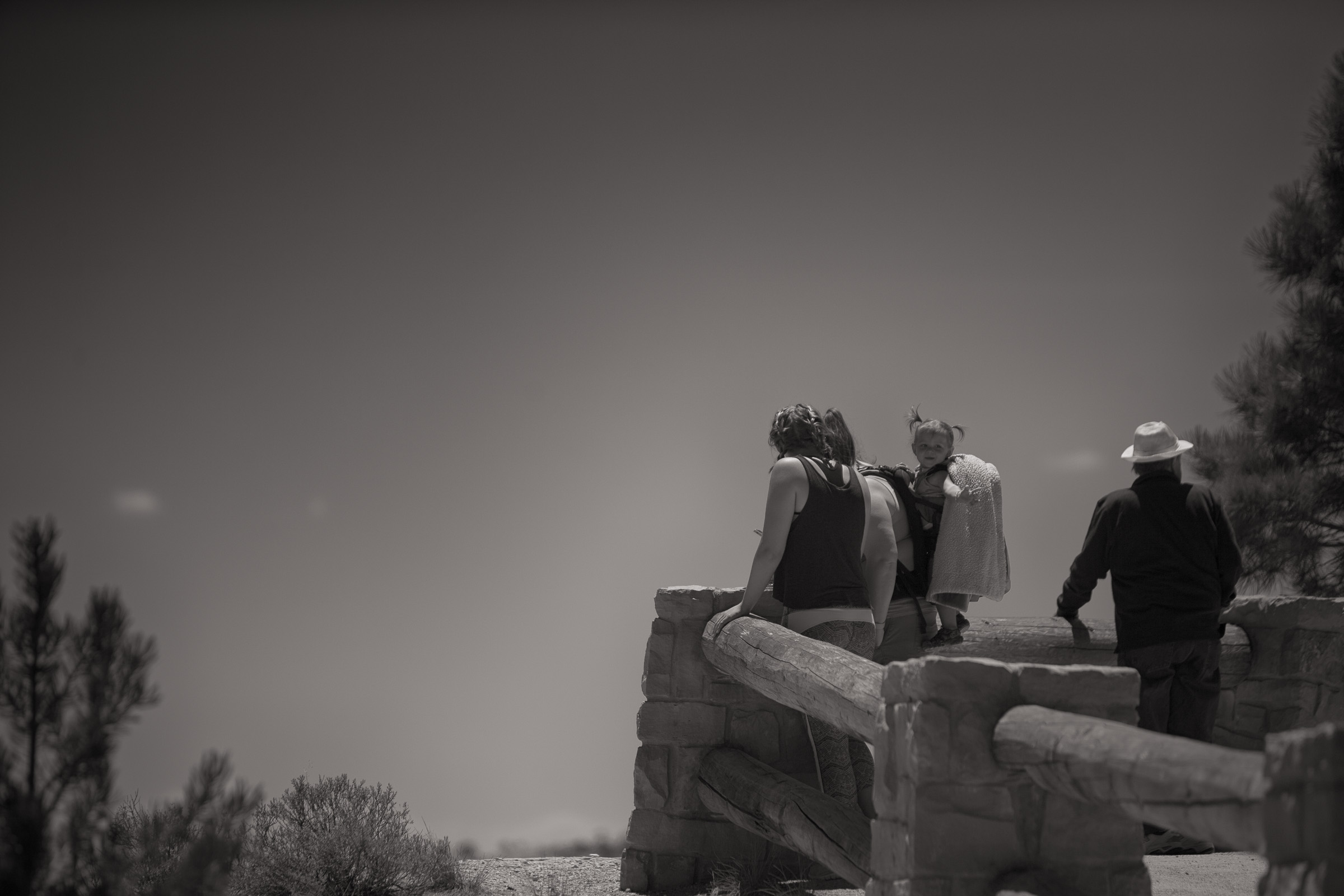
A photograph may be finished when it leaves my hands, but it is not finished being interpreted. The file stays the same. The crop does not move. Nothing inside the frame rearranges itself. What changes is the person looking at it.
That person was not standing beside me when I took the photograph. They do not know what happened before the shutter closed, what was outside the frame, which sound caused everyone to turn, why one person suddenly became quiet, or why a small detail seemed important enough for me to raise the camera. They arrive with the photograph and whatever they bring with them: memory, experience, expectation, training, culture, mood, and the habits that influence what they notice first.
That creates a problem for anyone trying to communicate visually. The creator already knows where to look and why it matters. The audience does not. We can put useful information into a frame and still discover later that the person receiving it paid attention to something entirely different.
In the previous article, The Problem: When Nothing Is Wrong and the Work Still Fails, I wrote about the gap between what the creator experiences and what the finished work actually carries. A technically correct photograph can still feel thin because the photographer remembers more than the photograph contains. The next part of that problem is understanding what happens when another human being has to receive whatever survived.
Looking Is Not the Same as Seeing
Photographers eventually have the irritating experience of opening a file later and finding something we would have sworn was not there. A bright sign sits behind the subject. Somebody at the edge of the frame is doing something more interesting than the person we were concentrating on. A tool merges into a body. A white truck that seemed invisible on location becomes the loudest object in the photograph.
The camera did not add any of those things later. We simply stopped paying attention to them.
I ran into this while traveling through the Southwest and photographing places like Horseshoe Bend, Canyon X, and the Grand Canyon. At first I was interested in the landscape because that was the obvious reason to have a camera there. Eventually the tourists became part of what interested me. People gave the landscape scale, but they also brought all the ordinary behavior people carry into extraordinary places.
When I reviewed the files later, I found moments I had been looking toward without really seeing. A child riding in a backpack looked completely finished with sightseeing. A man wearing a CIA hat appeared to be taking an unusually public approach to intelligence work. Other people were watching one another while nearly everyone around them stared toward the canyon. Those moments were physically present. My attention had simply ranked something else as more important.
That is the part photographers have to remember. Human attention is selective. We do not inspect every object, face, color, edge, gesture, and relationship with equal weight. Something receives priority and other information becomes easier to ignore. The camera does not share that private ranking. It records the rectangle.
The viewer gets their own turn after that. They may notice the face first, or the sign behind it, or the person at the edge, or the strange hand position I barely registered while taking the picture. My intention gives me a reason for taking the photograph. It does not guarantee that another person will enter the image through the same door.
Attention Needs Somewhere to Go
I learned another version of this while photographing an AH-1 Cobra in Iraq. I had a frame where the helicopter was sharp, the exposure worked, and the shutter speed had frozen the rotor blades cleanly. From a technical standpoint, there was not much to complain about.
The problem was that the aircraft looked like a plastic model hanging in the sky.
I knew it was flying because I had heard it coming, felt the air change, and watched dust move across the ground. My memory supplied movement that the photograph had largely removed. A stranger did not have that information.
Slowing the shutter enough to allow some motion into the rotor changed the way the aircraft read. The exact shutter speed mattered less than the reason behind the decision. Movement itself was information, and the photograph needed enough of it to help the viewer understand what the machine was doing.
That changed the way I thought about sharpness. A technically clean image is not necessarily an accurate translation of the experience. Sometimes the information that matters is motion, instability, pressure, distance, or the relationship between two things. Technical control is useful when it helps that information survive. It becomes a problem when control starts replacing the reason for the photograph.
The same thing happens with attention. Creative work is constantly told to stop the scroll, break the pattern, grab somebody immediately, and keep them from moving on. That is understandable because nobody receives a photograph they never notice. But getting attention is only the first part of the job. Once somebody enters the image, there needs to be somewhere worth going.
A face may pull the viewer in first while the hands explain what the person knows how to do. An athlete may lead the frame while the reaction behind them shows what the play meant. A product may be the first recognizable object, but the way somebody uses it may give the product its reason for being there. The first read gives the viewer an entrance. The rest of the photograph determines whether there is anything worth staying for.
Familiarity Helps Until Everything Looks Familiar
Human beings rely on familiar patterns because they help us understand things quickly. A worker with a tool, an athlete on a field, a bull in an arena, or an aircraft on a flight line gives the viewer basic orientation without requiring much explanation.
That familiarity is useful. The problem comes when the category is all the photograph has.
We have all seen the contractor beside the truck, the executive against the clean wall, the athlete looking seriously into the camera, and the business team gathered around a laptop as though the spreadsheet has just revealed the location of buried treasure. We understand those photographs immediately because we have seen versions of them before. The category arrives quickly, but there may be nothing specific enough to keep the image from blending into everything else around it.
A local rodeo gave me a better example. In one photograph, a rider had been thrown and a red cowboy boot was hanging in the air. The situation was familiar enough to understand without explanation. Horse, dirt, rider, something went wrong. The boot made the event specific. It stopped being an example of a rodeo accident and became this accident at this particular instant.
Another frame had a man trying to get away from a bull while most of the people nearby looked concerned. Two men behind the fence were laughing, and one was holding a beer. Their behavior changed the photograph without removing the danger. Now there was also information about the relationship between the people involved. They seemed to know this man well enough that his current problem had become entertainment.
The familiar information helps the viewer understand where they are. The specific information gives them a reason to care about this version of the situation. That is also why simply being different is not enough. A strange angle, heavy color treatment, blur, smoke, dramatic light, or some other interruption may get attention, but difference only becomes useful when it reveals something about the person, place, work, or event. Otherwise, it is just another visual habit waiting to become familiar.
Context Changes the Meaning
The viewer also brings their own history into the photograph, and that makes visual communication less predictable than a lot of creative advice suggests. A mechanic may look at somebody’s hands before their face because the hands reveal whether the work looks competent. A coach may notice balance or fatigue in an athlete. A Marine may recognize spacing, equipment, or behavior that another viewer never thinks to inspect. Somebody who knows the person in the photograph may interpret a gesture differently than a stranger.
The visible information has not changed, but the person receiving it has.
That is why I became skeptical of simple emotional formulas. Crossed arms do not automatically mean somebody is defensive. A tight jaw can come with anger, pain, fear, concentration, effort, or a mouthguard. A wide lens does not guarantee intimacy, and a long lens does not automatically create emotional distance. Those things can influence how an image is received, but context determines what they are working with.
For me, the useful response was to stay closer to observable evidence. Instead of deciding somebody looked nervous and then trying to photograph nervousness, I started watching what changed. A hand kept returning to the zipper on a jacket. Somebody who had been talking stopped when another person entered. A worker checked the same fitting twice. An athlete who had been pacing suddenly became still. Those are physical conditions the camera can record. The interpretation becomes stronger when the photograph contains enough surrounding information to support it.
That distinction matters beyond photography. Writers, filmmakers, designers, marketers, and other creators can all know exactly what they intended while the audience receives only the evidence actually contained in the work. Intention matters to the creator. Evidence is what the audience has to work with.
The Science Has to Change Something
This is where attention, perception, memory, and pattern recognition became useful to me. I was not interested in turning photography into neuroscience theater or using scientific terms because they made ordinary creative decisions sound more important. I wanted to understand enough about how people receive visual information that the knowledge changed what I noticed while I could still do something about it.
Knowing that attention is selective gives me a reason to stop staring at the subject for a few seconds and scan the rest of the frame. Knowing that familiar patterns are recognized quickly helps explain why category photographs communicate immediately and can become forgettable just as quickly. Knowing that context changes interpretation keeps me from treating body language like a fixed code. Knowing that memory affects what I bring to my own photographs reminds me that I may be giving the image credit for information another viewer cannot access.
The science does not tell me what another person has to feel. It gives me better questions about what I am putting in front of them.
That difference matters. I do not need complete control over the viewer, and I do not think that kind of control is possible. What I can control is whether I noticed the bright doorway before it took over the frame, whether the hands remained visible when they carried the proof, whether the environment provided useful context, whether movement survived when movement mattered, and whether the edit strengthened the information already present instead of trying to replace what I failed to photograph.
That is the practical point underneath all of this. Better understanding should eventually become better judgment.
The thinking that grew out of these problems eventually became the Neuro Photographic Method. I use three stages to keep the decisions simple enough to work with in the field. Build the Eye asks what the camera needs to preserve. Guide the Body asks how the visible information should work together once it is inside the frame. Mark the Memory asks what deserves to remain after the photograph has been received.
Those stages do not dictate a lens, aperture, composition, or editing style. They are a way of keeping the technical decisions attached to a reason. The answer should change because the person, assignment, audience, environment, and purpose change.
The photograph does not stop being interpreted when I finish it. Another person brings their own attention, memory, and experience to the other side. I cannot control all of that, but I can pay much closer attention to what I give them to work with.
Tell us about your thoughtsWrite message