
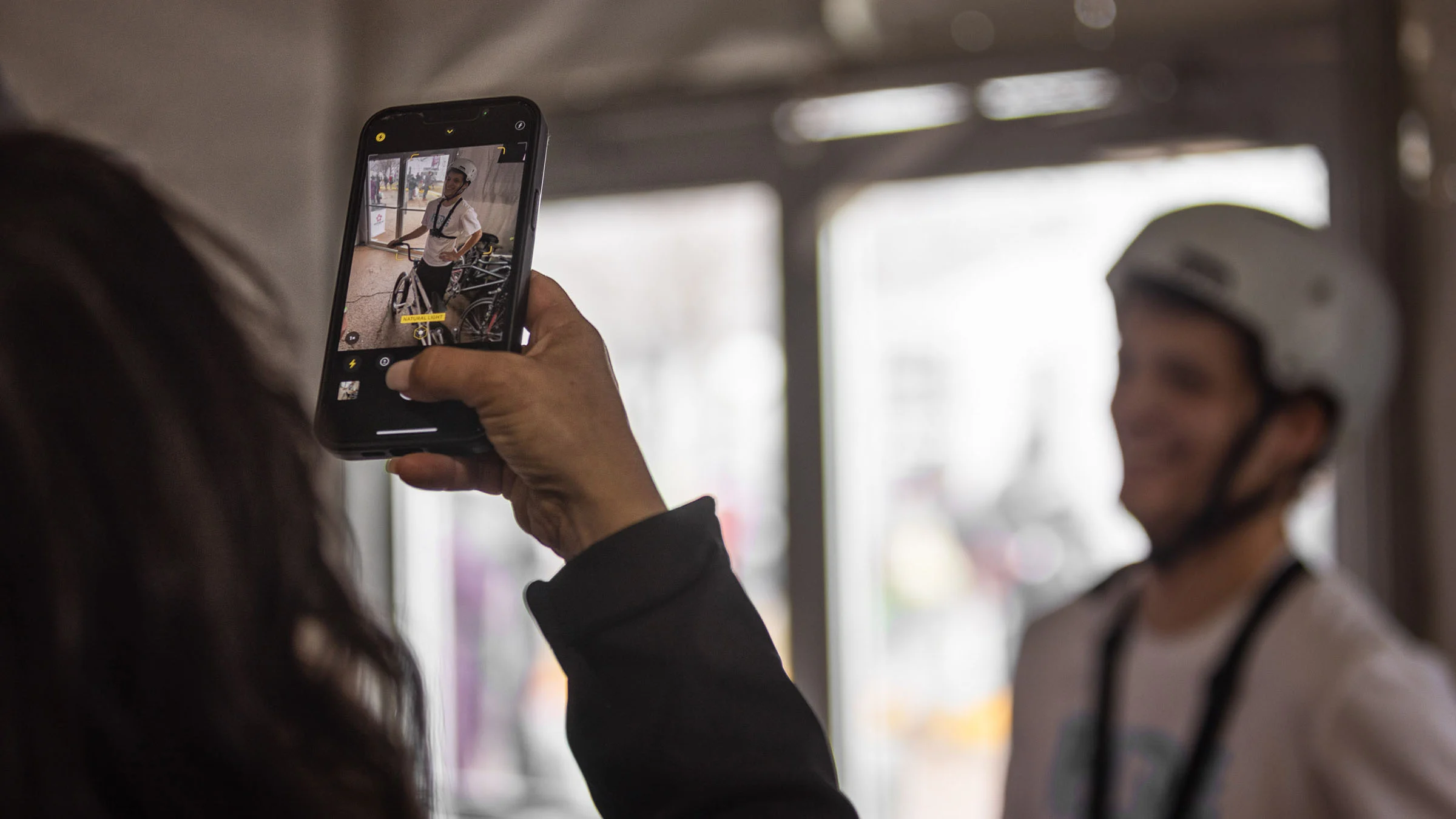
Professional images give your business a consistent visual foundation. Customer content adds the customer’s own experience.
A customer posts a photo from your shop. A member shares a clip from training. Someone tags your crew after a job well done. Those moments can show what it feels like to do business with you. They have a human quality a planned campaign can’t fake.
But customer posts can’t be scheduled around your next launch. They may never show the service you need to promote, the people a new hire would work beside, or the product detail a buyer needs to see. That’s where professional brand photography comes in. These two kinds of content have different jobs. A business gets more from them when it uses both.
Two Kinds of Images. Two Different Jobs.
Customer content shows the experience from the customer’s side. It can capture the first time someone tries a product, a personal win, or a moment with a team they like. The business doesn’t control every detail, and that’s part of its appeal.
A planned photo shoot gives the business a chance to choose what it needs to show. The people, products, work, setting, and details can all be photographed with a purpose. The images can then support a website, a launch, recruiting, a sales presentation, or a seasonal campaign.
One gives you the customer’s point of view. The other gives you a useful set of images for telling your part of the story. Neither needs to replace the other.
A Phone Is a Camera. It Isn’t a Plan.
A good photo doesn’t care what camera made it. A phone can capture a real moment beautifully. A high-end camera can make a dull picture. The difference comes from the choices behind the image: what we show, what we leave out, where we stand, when we shoot, and what the picture needs to communicate.
That planning is especially useful when a business needs a group of images that work together. A single customer post might be perfect for a social update. A coordinated set can show the product in use, the people behind the work, the place where it happens, and the details someone might want to examine before buying or booking.
The goal isn’t to make every image look polished in the same way. It’s to make photographs that feel like your business and give your team something useful to work with.
Build the Visual Foundation
Before a shoot, decide what the pictures need to do. Are you introducing a new service? Showing the range of work your crew handles? Helping a potential member imagine training at your gym? Giving a product launch more than a single image?
Those answers shape the shoot. They help determine who should be there, what we need to photograph, and which moments deserve time. The finished images can include the wide view that establishes the place, the close detail that shows the craft, and the people whose work or experience gives the business its character.
Then customer content can extend that foundation. Customers may share their own photos, clips, and reactions. The business has its planned images ready for the places where it needs consistency, and real customer contributions add another point of view.
The Photographs Are the Product
My paid work is the photography and the images delivered under the agreed license. I’m not selling a monthly marketing system. I’m happy to offer practical advice on where the photographs could work best, whether that’s a website, a campaign, an email, or a recruiting push. That guidance comes with the creative work.
Your team stays in charge of the marketing. You receive photographs you can use across your business, with a clearer sense of how they might support what you’re already doing.
Customer content can show people talking about your business. Brand photography gives you deliberate images to show what you do, who does it, and what the experience looks like. Put both to work, and your story has more than one voice.