
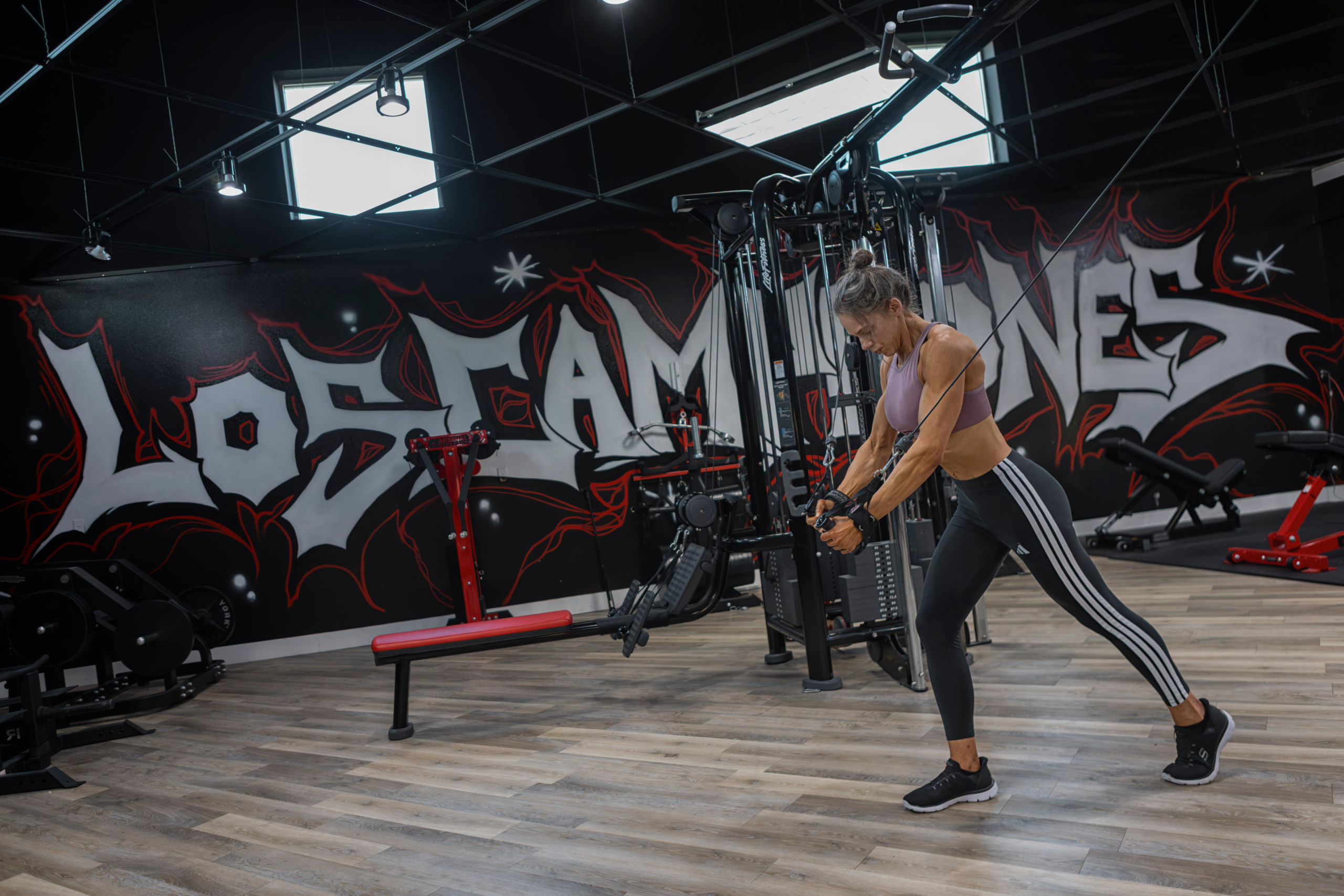
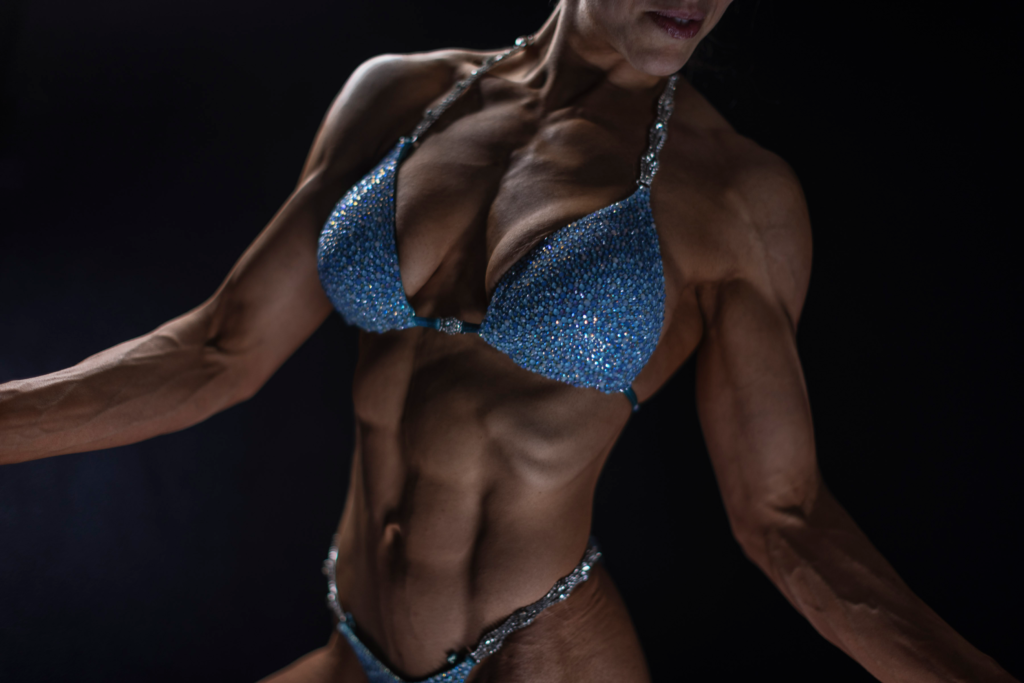
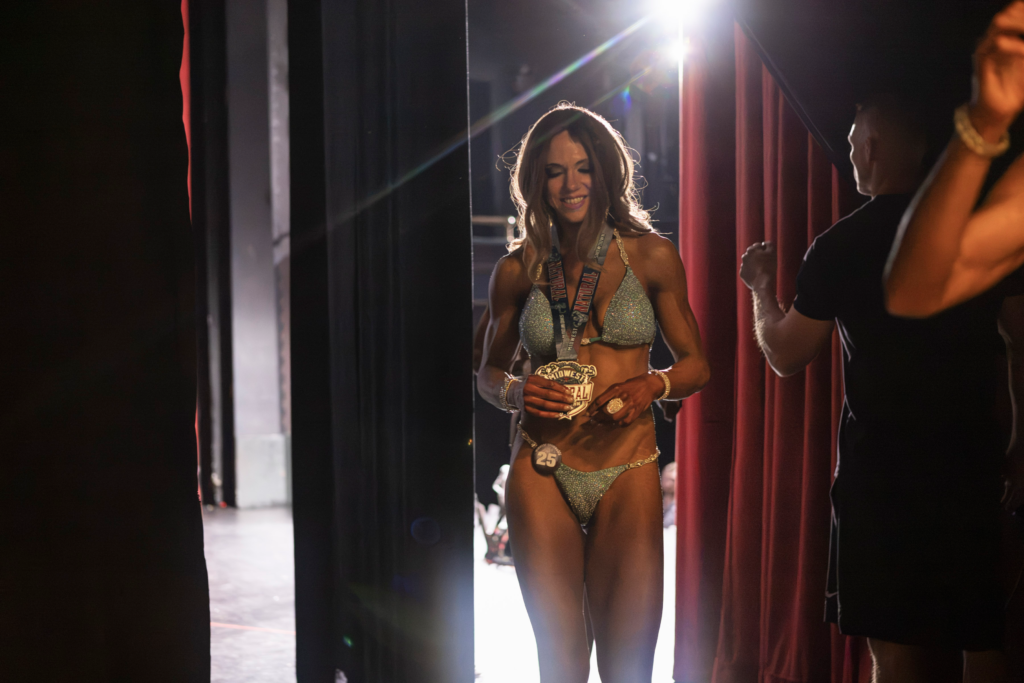
Sandy Cuadra competes in the bikini class of bodybuilding. For the past year, I’ve been photographing what goes into that: training, posing practice, competition bikinis and the preparation behind the few minutes an audience eventually sees.
We were in Sioux Falls, South Dakota, for her competition. I’d photographed much of the preparation, but this would be my first time photographing her onstage. The day before, we went to Los Campeones to make training photographs.
Sandy had arranged permission. The owner and staff welcomed us into the gym and gave us room to work. They trusted us to behave like we understood we were guests in somebody else’s business.
I take that seriously. A member paying to train shouldn’t have to surrender a machine because I’ve developed an artistic attachment to it.
We expected restrictions on flash and lighting stands, so we left them behind. The owner turned out to be comfortable with both. We worked with what we’d brought. I walked in, looked at the light and found where we could shoot.
The machine area was brighter, more open and less crowded. There was Los Campeones artwork across the wall that I wanted in the photographs. It gave us a place, rather than a collection of equipment that could have been anywhere.
There was also a giant mirror. Excellent for checking your form. Equally good at revealing a photographer who thinks he’s found a clever angle.
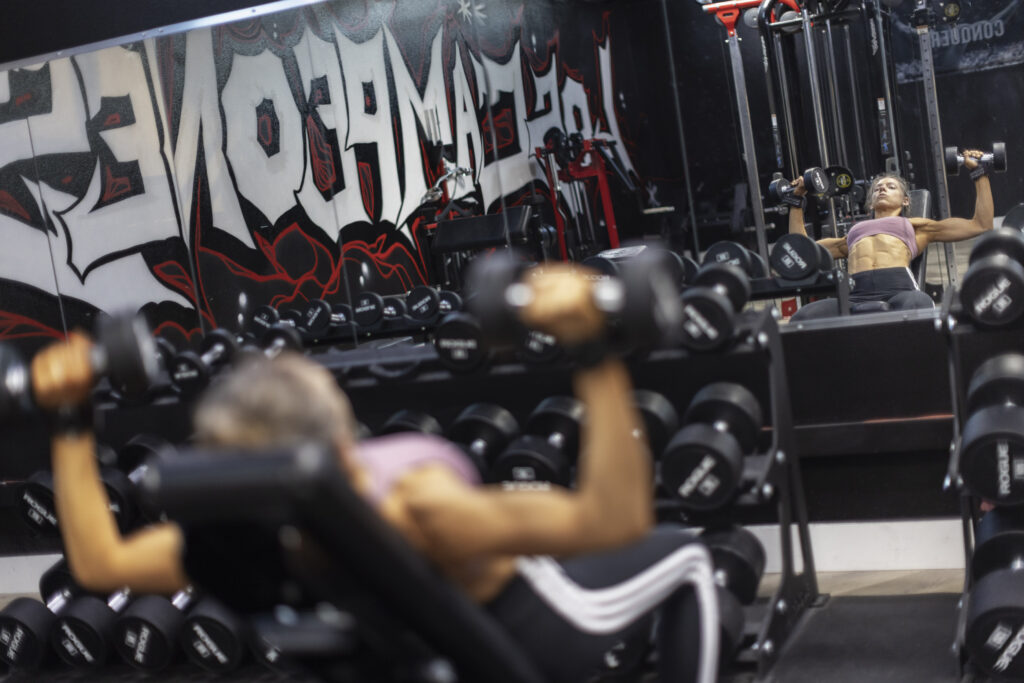
I’d get Sandy positioned against the background, lower the camera, check the frame and discover my own contribution staring back at me. Move again. Watch the reflection. Keep the equipment from intersecting her body in some anatomically unfortunate way.
None of this requires a meeting. It requires looking.
That’s what knowing your equipment buys you. I can concentrate on the person, the room and the movement because operating the camera doesn’t require my undivided attention. After photographing in the Marine Corps, from aircraft, on mountains and around moving vehicles, I’ve had plenty of opportunities to learn which decisions need making immediately.
The location changes. I still have to bring back the photographs. Nobody commissioning the work needs a lengthy explanation of why the conditions failed to accommodate my preferences.
A gym gives me different conditions to work through. I need to recognize the light, choose a position and stay aware of what’s happening around the camera. Someone approaching the machine beside us is part of the situation. They shouldn’t have to wait until I finish being inspired.
Sandy had her own requirements. Her instructions were to lift very lightly and avoid cardio before the competition. We kept the weights light and worked through controlled movements for the photographs.
She’d spent a year preparing. I wasn’t about to interfere with that because a heavier dumbbell might make me feel more convincing as a fitness photographer.
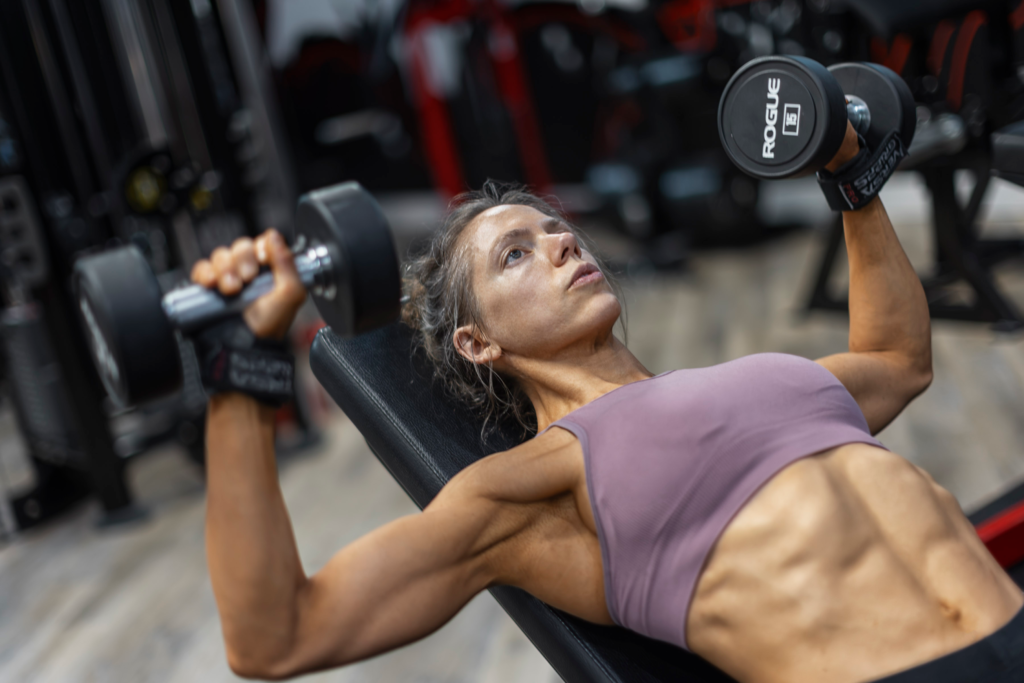
The movement gave me plenty. I started wide enough to show the room, then moved closer to photograph her full body working with the equipment. Closer again, I could concentrate on the grip, the shoulders or the part of the exercise carrying the information.
I wanted photographs that did different jobs. One showed the place. Another let you follow the movement. A tighter frame brought you into the physical detail.
Repeated sets gave me time to change position. I could work from the left, move right or bring the camera lower. Sometimes I moved gradually through a repetition, watching the background shift while keeping the important detail in focus.
There’s a difference between making more photographs and finding something else worth photographing.
I’m watching how the hands connect with the equipment. Where the feet land. Whether a shoulder disappears against the background. Whether the expression belongs to the movement or Sandy has started holding herself in position while I fiddle.
Give someone enough instructions and eventually they stop exercising and start demonstrating that they can follow instructions. You get the dumbbell. You get the pose. You lose the person.
I want enough direction to make the movement readable and enough attention to recognize when I should shut up.
My own training helps. I know the appeal of working hard in a room where working hard feels welcome. Personally, I don’t want to finish a set and wonder whether grunting has damaged the establishment’s commitment to serenity.
That’s my preference. It doesn’t give me permission to photograph every gym as though it belongs to me.
A prospective member needs to recognize what your facility actually offers. The equipment, the space, the atmosphere, the kind of activity happening there. Someone looking for serious lifting should be able to see it. Someone looking for a different experience deserves the same clarity.
Los Campeones had its own character. I wanted that character in the photographs, along with Sandy’s form and the work we’d spent the past year documenting.
This session belongs to that longer project. We’d photographed the preparation in pieces. Now we were in Sioux Falls, the competition was the next day, and I was about to photograph the part we’d been working toward.
The gym stayed open. Members kept training. We worked with the available light and Sandy’s limits. Handling those conditions was my responsibility. The owner had a business to run. Sandy had a competition to prepare for. Neither needed the additional job of managing the photographer.
If you’re commissioning fitness photography, bring me the purpose, the location and the people. Tell me where the pictures need to work. The photographs on my website show the standard I bring with me.
I’ll get on with making them.